
Categories
 Sarees
 Women’s Wear
 Men's Wear
TOP RATED PRODUCTS
-
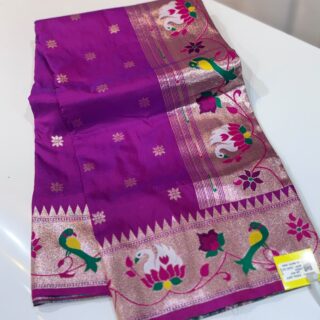 Rajhuns paithani #jh106
Original price was: ₹1,499.00.₹850.00Current price is: ₹850.00.
-
 lehriya anarkali pattern #jh111
Original price was: ₹2,600.00.₹1,400.00Current price is: ₹1,400.00.
-
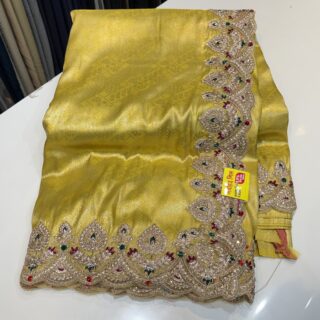 New designer saree #jh110
Original price was: ₹3,700.00.₹2,500.00Current price is: ₹2,500.00.
-
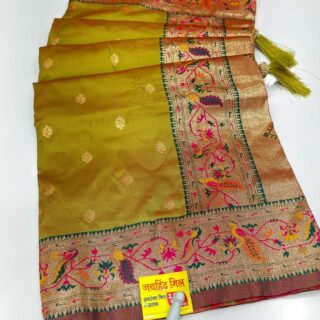 Lotas border saree #jh109
Original price was: ₹1,950.00.₹1,000.00Current price is: ₹1,000.00.
-
 3 pis #jh108
Original price was: ₹1,500.00.₹950.00Current price is: ₹950.00.
GALLERY










CLIENT'S TESTOMONIAL

Preeti
Amazing collection and great pricing! The designs are unique, and delivery was super fast.

Rohini
Absolutely love the quality of Jai Hind Mills sarees! The fabric is so soft and elegant. Will shop again!

Secondly, after building a knowledge base, we need a new machine learning paradigm to optimize both predictive power and privacy preservation in data reprogramming. Knowledge acquisition is to automatically build a https://www.troposproject.org/framework-organizational-resilience/achieving-lengthy-term-resilience-with-nists/ knowledge base (i.e., training data) of diverse feature sets with strong/weak privacy-preserving and predictive capabilities in a machine-learnable form. However, most of these methods focus on augmenting data predictive power and lack privacy considerations. While an automated classifier may be seen as a fair decision-making tool, if the training data are inherently biased, the generated rules will result in potentially discriminatory decisions.

E The result of new features generated by MOAT on the Lymphography dataset. D The result of new features generated by GRFG on the Lymphography dataset. C The result of new features generated by PDR on the Housing Boston dataset. B The result of new features generated by https://sellrentcars.com/news/climbing-search-rankings-seo-technical-maintenance-done-right.html MOAT on the Housing Boston dataset. A The result of new features generated by GRFG on the Housing Boston dataset. We apply this attack both in the original and reprogrammed feature spaces.
This reflects real-world privacy protection needs under regulations such as the General Data Protection Regulation in Europe4, where indirect leakage of personal attributes must be minimized. During latent space optimization, our privacy constraint ensures that newly generated features exhibit minimal statistical dependence on age. Performance is used as the optimization goal, and privacy is used as a gradually tightened constraint. On this basis, we optimize the latent representation to further improve the accuracy of downstream tasks while ensuring privacy. Similarly, we can use the privacy evaluator Ψpr( ⋅ ) to assess the extent to which latent representations reveal sensitive features.
3 Empirical and Adversarially-Robust Privacy
In this way, the output data set is always as private as specified by the model, although it may fail to provide enough utility if the model parameters are too strict. Ex post methods rely on the analysis of the output data set and, therefore, it is possible to generate a data set that is not safe enough according to a certain criterion; several iterations with increasingly strict privacy parameters and decreasing utility may be needed. Perturbative masking generates a modified version of the microdata set such that the privacy of the respondents is protected to a certain extent while simultaneously some statistical properties of the data are preserved. Last but not least, the microdata set contains confidential attributes with sensitive information on respondents, such as salary, religion, political affiliation or health condition. These authors gave protocols to compute any arithmetic function in a secure way when at least two thirds of the parties are honest.
The privacy-aware features https://freeassangenow.org/the-evolution-of-cybercafe-technology-redefining-the-digital-social-experience/ should improve performance on downstream tasks, and avoid exposure to sensitive features. We first represent the features and operators to facilitate model processing. In the feature space generation phase, we map the knowledge base into a privacy-aware latent space by a sequence encoder. First, alternative methods for calculating HSIC and their specific connections to privacy preservation remain promising directions to explore. The hyperparameter α in the model is used to balance the relationship between maximizing the mutual information with the downstream task label and minimizing the mutual information with the sensitive features. F The result of new features generated by PDR on the Lymphography dataset.
- Therefore, it consists of techniques for modifying the original data in such a way that the private data remain private even after the mining process (Verykios et al. 2004).
- That is, the presence or the absence of any single record does not significantly alter the output of the algorithm.
- In detail, we first compute the feature set column-wise descriptive statistics (i.e., count, standard deviation, minimum, maximum, first, second, and third quantile).
- If both sender and receiver share some information, an alternative to digital signatures are message authentication codes (MACs).
- In this scenario, we seek to protect users from unrequested profiling by database owners.
- Next, it considers privacy-enhancing techniques that directly address the hide strategy, but also aid in implementing the separate, control and enforce strategies.
Using SMC protocols based on cryptography (many of these resort to homomorphic encryption) or on sharing perturbed information in ways that do not alter the final results often requires changing or adapting the data mining algorithms. The first was introduced by Agrawal and Srikant (2000) in the database community. Quite recently, a perturbative adaptation of k-anonymity for streams, based on a primitive called steered microaggregation, has been introduced by Domingo-Ferrer and Soria-Comas (2017). In the static data setting, k-anonymity and its extensions are well-known privacy models that follow this approach.

Best Practices and Practical Guidance
In the non-perturbative masking approach, one seeks to hide each record in the stream within a group of records. In the perturbative masking approach, some noise is added to conceal the real value of the records. This model was originally defined for queryable databases and consists in perturbing the original query result of a database before outputting it. A well-known privacy model is k-anonymity (Samarati and Sweeney 1998), which requires that each tuple of key-attribute values be shared by at least k records in the database.

ABOUT US

Jai Hind Mills – A trusted name in premium textiles, blending tradition with innovation to deliver superior quality fabrics.
FEATURED PRODUCTS


AD WIDGET

FROM THE BLOG

Step into the world of elegance and tradition with Jaihind Mill’s exclusive saree collection. Whether you’re looking for a classic silk saree, a trendy designer drape, or a light and comfortable daily wear, we have something special for every occasion — and now, you can shop it all online! Our saree collection is carefully curated …
Beautiful Saree Collection Now Available Online – Shop at Jaihind MillRead More
Leave a Reply