
Categories
 Sarees
 Women’s Wear
 Men's Wear
TOP RATED PRODUCTS
-
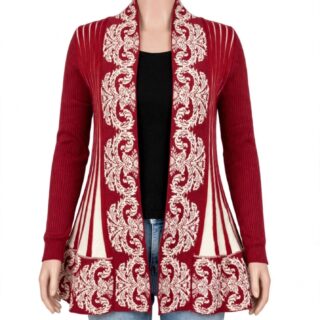 shrug for ladies #111
Original price was: ₹950.00.₹450.00Current price is: ₹450.00.
-
 3 pic set #jh110
Original price was: ₹800.00.₹600.00Current price is: ₹600.00.
-
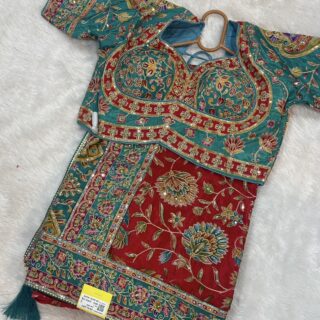 New launch saree #jh109
Original price was: ₹8,500.00.₹4,200.00Current price is: ₹4,200.00.
-
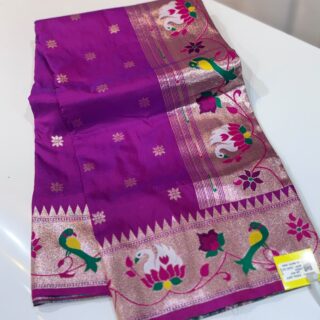 Rajhuns paithani #jh106
Original price was: ₹1,499.00.₹850.00Current price is: ₹850.00.
-
 lehriya anarkali pattern #jh111
Original price was: ₹2,600.00.₹1,400.00Current price is: ₹1,400.00.
GALLERY










CLIENT'S TESTOMONIAL

Preeti
Amazing collection and great pricing! The designs are unique, and delivery was super fast.

Rohini
Absolutely love the quality of Jai Hind Mills sarees! The fabric is so soft and elegant. Will shop again!
This helps to cut back the root-level threats, such as the injection of malicious code into the firmware, extraction of cryptographic keys, and intercepting data between RoT and other units. This ensures program booting into system states which are free of persistent malware. An adversary can not retain undetected control of 1’s local system.
Firmware Assaults
The RoT ensures the integrity and safety of a system from the beginning of the boot course of. A important aspect of the Hardware Root of Trust is the entropy supply to feed a device’s cryptographic algorithms. Therefore, a real random number generator (TRNG) ought to be employed to make sure the best high quality of entropy, as a substitute of a using pseudo-random quantity generator (PRNG). A reliable dynamic entropy source (such as a TRNG) is essential for an HRoT for creating a https://chinanews777.com/uninterrupted-mobile-campaign-management-with-linken-sphere.html secure operational surroundings. This protects the Safe Boot flow, provides comprehensive asset safety, and enhances the overall security of the system’s cryptographic capabilities. Utilizing TPMs enhances the integrity of methods by enabling secure boot processes.

What Are The Methods To Avoid Root Of Belief Attacks?
Lastly, organizations using HRoT often enjoy elevated regulatory compliance. As cybersecurity requirements tighten globally, having an established root of trust aids in assembly these evolving requirements successfully. Efficient key administration is essential; it’s not nearly creating strong keys but in addition securely storing and distributing them.
Hardware Root Of Belief Vs Software Program Root Of Trust
They confirm that a tool boots utilizing trusted software program solely, preventing assaults from malicious code throughout startup. Hardware Root of Trust (RoT) considerably enhances cybersecurity by establishing a secure foundation for computing environments. By integrating RoT, devices can confirm the integrity of their firmware and software program throughout startup. Safe enclaves, like Intel Software Program Guard Extensions (SGX) and ARM TrustZone, carve out an isolated execution environment contained in the processor for sensitive operations. They fit cell and cloud-native use circumstances in which deploying devoted HSM hardware isn’t practical.
- Efficient key management is important; it’s not just about creating strong keys but additionally securely storing and distributing them.
- From a cybersecurity perspective, provide chain assaults mean manipulating dependencies corresponding to open-source libraries or third-party distributors to get into the organization’s system.
- This ensures complete information sovereignty and eliminates any danger of vendor or provider entry.
- The selection of what Root of Belief to employ should be among the many most important issues chip designers and security architects face.
Compromised or poorly managed keys can result in vital vulnerabilities in any system. At the guts of this course of lies encryption, which transforms readable info right into a coded format. This makes it practically inconceivable for malicious actors to decipher without the right keys. These keys act as digital locks, granting access solely to those who possess them.
In a firmware assault, cybercriminals spot vulnerabilities in the firmware and install malware, and take control of the whole hardware. Since typical antivirus software not often scans firmware or screens it, such forms of cyberattacks are tough to detect. Root of Belief is a fundamental facet of hardware and software program security, an preliminary factor from which all different safety elements branch out. Lastly, there’s an ongoing debate about trust itself—who ensures that the hardware wasn’t compromised throughout manufacturing?
Widespread Threats And Vulnerabilities In Cybersecurity
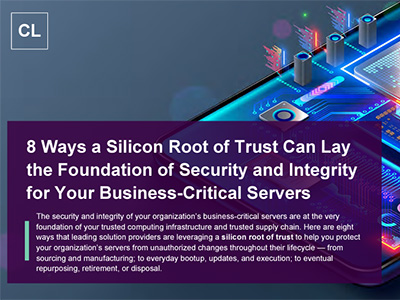
It acts as the first trusted element in a series of belief, starting earlier than the working system or functions load. The Trusted Platform Module (TPM) is a dedicated hardware element designed to enhance the safety of computing methods. It supplies a root of trust for the platform and provides varied security-related features. The primary function of a hardware TPM includes safe storage, key management, and attestation. A Root of Belief, or RoT, is commonly used as the place to begin in a chain of belief.
It presents safe storage for cryptographic keys, supports key technology and administration, allows distant attestation, and ensures the integrity of the system by way of safe boot processes. The Root of Belief (RoT) is a foundational safety element in a computing system that may at all times be trusted. A Root of Trust is broadly outlined as the security basis for a semiconductor or digital system. Any secure function performed by the gadget or system relies in complete or in part on that Root of Trust. Hardware root of trust is a security foundation built into a device’s bodily hardware that helps show the gadget, firmware, and cryptographic operations can be trusted.

ABOUT US

Jai Hind Mills – A trusted name in premium textiles, blending tradition with innovation to deliver superior quality fabrics.
FEATURED PRODUCTS

AD WIDGET

FROM THE BLOG

Step into the world of elegance and tradition with Jaihind Mill’s exclusive saree collection. Whether you’re looking for a classic silk saree, a trendy designer drape, or a light and comfortable daily wear, we have something special for every occasion — and now, you can shop it all online! Our saree collection is carefully curated …
Beautiful Saree Collection Now Available Online – Shop at Jaihind MillRead More
Leave a Reply